Villa · apart-hotel · hotel · restaurant · office
Air conditioning and VRF systems
We design and install climate systems for properties where quiet operation, steady temperature and no outdoor units on the facade matter: VRF for an entire apart-hotel, ducted systems for a villa, a chiller with fan coils for a hotel. Together with electrical, drainage and controls — one team, one warranty.
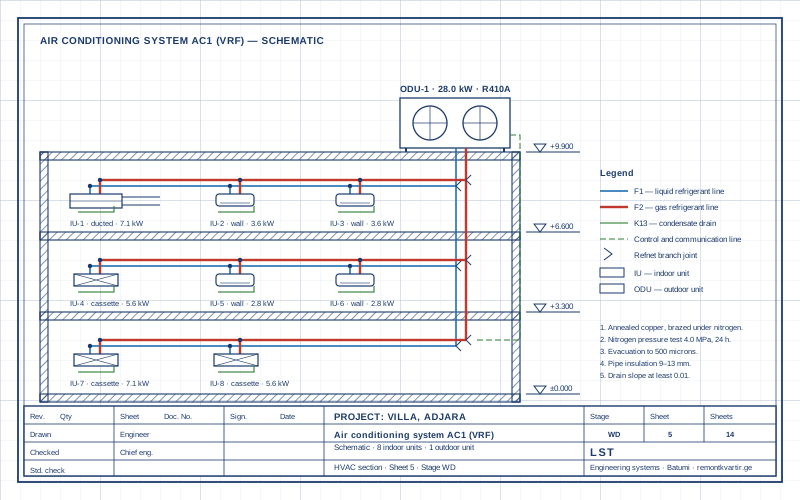
- from 8 kWVRF systems
- nitrogen + 40 barbrazing and pressure testing
- 5 yearsinstallation warranty
Which system to choose
| System | Where it fits | Why |
|---|---|---|
| Multi-split, 2–5 units | apartment, small house | one outdoor unit instead of five, no separate pipe runs on the facade |
| Ducted units | villa, penthouse, restaurant | the unit is hidden above the ceiling, only grilles are visible; quiet, even, no draught over the bed |
| VRF / VRV, 8–100+ kW | apart-hotel, villa from 250 m², office | one circuit for 10–60 indoor units, individual control in every room, per-room metering, heating down to −20 °C |
| Chiller + fan coils | hotel, shopping centre, industrial site from 2,000 m² | cheaper per kW at high capacities, no refrigerant in guest rooms, easier service |
| Heat-recovery AHU | any property in Batumi | fresh air without losing heat or cooling; with dehumidification — the main defence against mould |
Batumi's climate sets its own rules
Humidity of 80–90% almost all year round, salty sea air and hot, humid summers. Here an air conditioner also works as a dehumidifier, and outdoor units on the seafront corrode twice as fast. So we specify units with anti-corrosion coated heat exchangers (Blue Fin / Gold Fin), correct falls and traps on condensate drains, and for enclosed spaces — supply-and-exhaust ventilation with heat recovery and humidity control. Without fresh air supply, an air conditioner cools the air but doesn't remove damp and stuffiness.
Why we do VRF together with the other building systems, not “after the renovation”
Refrigerant lines, drainage, power and communication cables are laid at the rough-in installation stage, and the panel for the outdoor units is sized for the right capacity from the start — see electrical panel assembly. When the AC contractor is called in after finishing, you get surface trunking on the walls, condensate pumps that hum at night, and a breaker that trips when the compressor starts. With us, air conditioning, ventilation, heating and controls are designed as one system: heating and cooling don't fight each other, and everything is controlled from one app.
Equipment
Daikin, Mitsubishi Electric, Toshiba, LG, Midea, Gree, Cooper&Hunter — selected to suit the budget and the job; ventilation — Systemair, Zehnder, Vents. Supplied through official distributors in Georgia with the manufacturer's warranty — see equipment supply.
Scope of work
Scope of work
Heat gains for every room, accounting for glazing and orientation, capacity selection, refrigerant pipe diagram with lengths and height differences, refnets, drainage, power supply, outdoor unit locations. For hotels — HVAC design as part of the building engineering design.
Insulated ACR-standard copper, brazing only under nitrogen (no scale inside), manufacturer's refnets, nitrogen pressure testing to 40 bar with a hold period, deep vacuum to 500 microns, additional refrigerant charge calculated from pipe length.
Wall-mounted, cassette, ducted, floor/ceiling. Ducted units come with ductwork, silencers, an access hatch and grilles matched to the ceiling; gravity condensate drainage with a trap, a pump only where there's no other way.
Roof, service balcony or ground pad: anti-vibration mounts, galvanised frame, sun and wind protection, condensate drainage, service access. Concealed facade grilles — in agreement with the architect.
Dedicated circuits from the panel, breakers rated for starting currents, VRF communication line, central controller or integration with BMS / smart home, Wi-Fi control, per-room energy metering.
Unit addressing, test run in cooling/heating modes, temperature and current measurements, pressure test and vacuum report, as-built pipe diagram, training for hotel staff.
Prices
Air conditioning and VRF prices
Labour prices, equipment not included. For VRF, ducted systems and chillers the exact price is per design; an estimate from your floor plan in 1–2 days.
| Work / item | Unit | Price, GEL |
|---|---|---|
| Split system installation up to 12,000 BTU (pipe run up to 3 m) | pc | from 250 |
| Split system installation 18,000–24,000 BTU | pc | on request |
| Multi-split: indoor unit / outdoor unit up to 60 kg / over 60 kg | pc | 150 / 300 / 400 |
| Additional pipe run (copper, insulation, cable) | lin. m | on request |
| Pipe run chased into the wall at rough-in (refrigerant + drain + cable) | lin. m | 50–60 |
| Ducted unit with ductwork and grilles | unit | on request |
| VRF: indoor unit with connection and drainage | unit | from 500 |
| VRF: outdoor unit, mains, refnets, nitrogen, vacuum | per kW | on request |
| VRF commissioning, addressing, central controller | system | on request |
| Chiller + fan coils, turnkey | property | per design |
| Heat-recovery AHU 300–600 m³/h with ductwork up to 20 m | set | from 3 500 |
| Villa pool dehumidification | property | per design |
| Split system cleaning and maintenance | unit | from 150 |
| Annual VRF maintenance (pressure, filters, drainage, report) | indoor unit | on request |
| Air conditioning and ventilation design | m² | on request |
| Call-out and diagnostics | visit | 70 (credited against your order) |
For apart-hotels and properties with 20+ indoor units — a design-based quote with a volume discount and a service contract with scheduled maintenance.
Send us a floor plan or photos of the property — we will calculate quantities and send a cost estimate with materials within 24 hours.
How the work goes
How we do air conditioning
- 01Survey
Floor plan, orientation, glazing, where outdoor units can go, requirements of the owners' association and the architect, how the rooms will be used.
- 02Calculation and options
Room-by-room heat gains, 2–3 system options (e.g. multi-split, ducted or VRF) with estimates and electricity running costs.
- 03Design and supply
Pipe route diagram, specification, equipment order from the distributor, schedule matched to the renovation stages.
- 04Installation
Pipework and drainage at rough-in; units after final finishing, so no dust gets into the heat exchangers.
- 05Commissioning and service
Pressure test, vacuum, start-up, reports, training. After that — scheduled maintenance every 6–12 months.
For hotels
VRF for an apart-hotel: a typical layout
A 40-room apart-hotel: 2–3 VRF outdoor units on the roof, 60–90 kW each, with heat recovery between zones → mains in the shaft → refnets on every floor → a 2.2–3.6 kW ducted or cassette unit in each room. Each room has its own controller with a limited temperature range; reception has a central controller: you can see where the AC is running with the window open, a room switches off at guest check-out, and a quiet mode runs at night. Consumption is metered per room, which matters if rooms belong to different investors.
Handled separately — corridors and lobby (supply unit with heat recovery), restaurant kitchen (extract with make-up air), pool and spa (dehumidification).
VRF and split system maintenance
We also service systems installed by others: diagnostics, leak detection, PCB repair, refrigerant top-up, heat exchanger cleaning with an antibacterial agent, condensate pump replacement. For hotels — a contract with scheduled pre-season maintenance and call-outs on request.
FAQ
FAQ — Air conditioning and VRF
What's better for a villa — VRF or multi-split?
Multi-split works well for up to 4–5 rooms. For a villa from 250 m² with ducted units and unified control, VRF is the better choice: one outdoor unit, fewer pipe runs, higher efficiency at part load, and heating in winter.
Can VRF heat a home in winter in Batumi?
Yes. Modern VRF systems heat down to −20 °C, and in Batumi it rarely drops below 0 °C. For villas we often combine VRF with underfloor heating from a boiler or heat pump.
How long does an air conditioner last by the sea?
With anti-corrosion coating, proper installation and annual maintenance — 12–15 years. Without protection, an outdoor unit on the seafront starts to rot within 4–6 years.
Why braze under nitrogen?
Without nitrogen, scale forms inside the copper. It clogs the filters and the electronic expansion valve, and the VRF compressor fails within 1–2 seasons. This is the main cause of costly breakdowns in other contractors' installations.
Do I need ventilation if I have air conditioning?
Yes. An air conditioner doesn't supply fresh air. In enclosed spaces in Batumi without fresh air supply, CO₂ and humidity build up and mould appears. A heat-recovery AHU recovers up to 85% of heat and cooling.
How long does VRF installation take?
Pipework — 1–3 weeks per floor or villa (at rough-in), units and commissioning — 3–7 days. Equipment made to order — 2–6 weeks.
Do you work with foreign owners?
Yes: contract, estimate and reports in Russian or English, staged payments, photo and video reports from the site if you're not in Batumi.
Need an estimate for your property?
Describe the job — we will work out the scope and propose a solution within 24 hours.
Other services
Related LST services
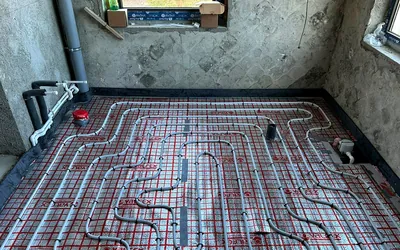 Rough-in installation of building engineering systemsElectrical, water, drainage, climate — before finishing work
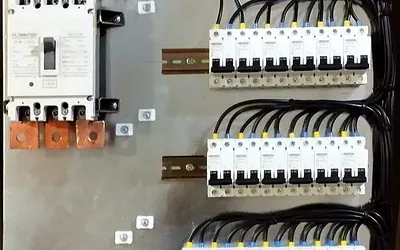 Electrical panel assemblyMain and distribution panels for apartments, houses and commercial sites
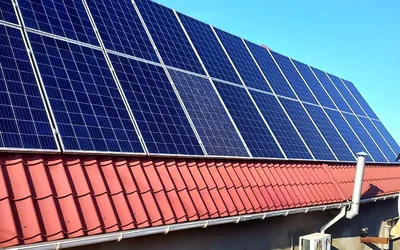 Solar panels and invertersGrid-tie and hybrid PV systems for homes and businesses, net metering
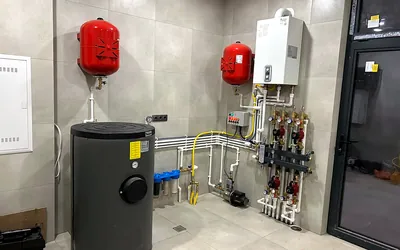 Boiler room installationBoiler, water cylinder, manifolds, pumps, controls: turnkey
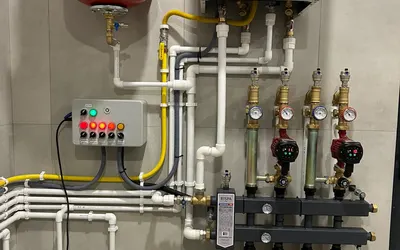 Climate automationZoning, weather compensation, smart home, building management (BMS)
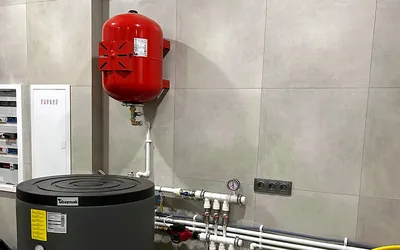 Equipment installation and pipingHeat pumps, VRF, multi-split, chillers, AHUs, water treatment, pump stations
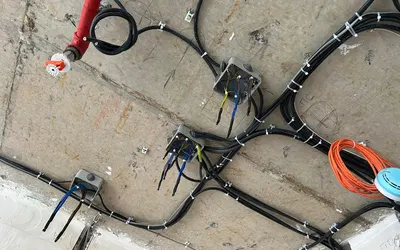 Low-voltage systemsCCTV, Wi-Fi, alarms, intercoms, server rooms
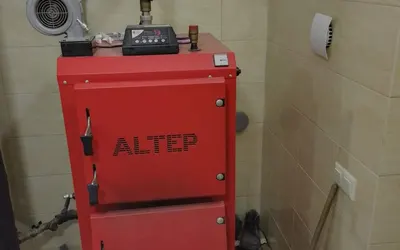 Materials and equipment supplyFull procurement to specification, delivered to site
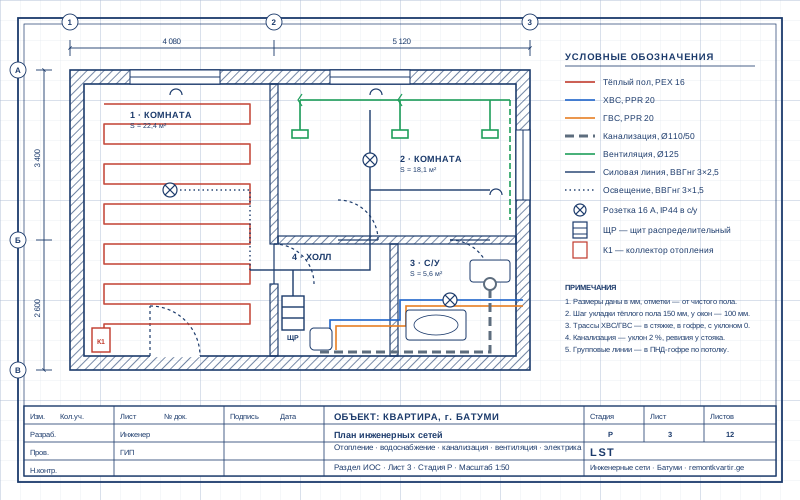 Building engineering designElectrical, plumbing, HVAC and low-voltage design for apartments, houses and commercial properties